- admin
- academic certified translation, authorized translation, birth certificate translation, certified document translation, certified translation, certified translation for embassies, certified translation for visa, certified translation meaning, certified translation requirements, certified translation services, court translation, embassy translation requirements, human certified translation, immigration translation, legal certified translation, Legal Document Translation, marriage certificate translation, notarized vs certified translation, official certified translation, official translation, Professional Translation, professional translators, sworn translation, translation accuracy, translation certification, translation compliance, translation office, translation responsibility, translation standards, what is certified translation
- 0 Comments
- 1651 Views
What Makes a Translation “Certified”?
A Clear & Practical Guide to Certified Translation
Many people ask: What is certified translation?
Is it just a normal translation with a stamp, or does it involve specific legal
and professional requirements?
In this guide, we explain the certified translation meaning,
what makes a translation officially certified, and when it is required for
embassies, courts, universities, and government authorities.
What Is Certified Translation?
Certified translation is an official translation of a document
accompanied by a signed declaration from the translator or translation office
confirming that the translation is complete and accurate.
This type of translation is commonly required for legal, immigration, academic,
and governmental purposes.
What Makes a Translation “Certified”?
A translation is considered certified when it meets specific professional
and formal requirements, including:
- Complete and accurate translation of the original document
- Official certification statement
- Translator or office signature
- Official stamp (when required)
- Date of certification
- Clear reference to the source document
What Is Included in a Certified Translation Statement?
The certification statement usually confirms that:
- The translator is qualified to translate the document
- The translation is accurate and complete
- The translation reflects the original document faithfully
This statement is essential for official acceptance by authorities.
When Is Certified Translation Required?
Certified translation is commonly required in the following cases:
- Embassy and visa applications
- Immigration and residency files
- Court documents and legal contracts
- Academic certificates and transcripts
- Birth, marriage, and divorce certificates
- Government and official correspondence
Certified Translation vs Regular Translation
| Aspect | Certified Translation | Regular Translation |
|---|---|---|
| Accuracy Declaration | Required | Not required |
| Official Use | Accepted | Usually not accepted |
| Signature & Stamp | Included | Not included |
| Legal Responsibility | Yes | No |
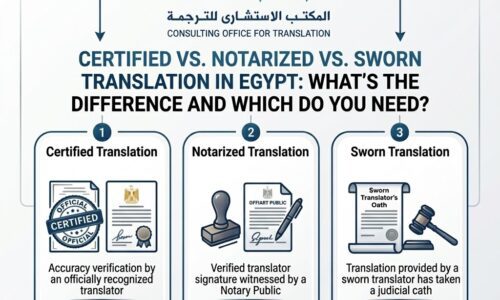
Does Certified Translation Require Notarization?
Not always. Certified translation and notarized translation are different.
Some authorities require only certification, while others may request notarization
or additional legalization.
Always check the specific requirements of the authority requesting the document.
Why Accuracy Matters in Certified Translation
Certified translation carries legal and professional responsibility. Any error,
omission, or inconsistency may result in rejection of the document or delays
in official procedures.
Need a Certified Translation You Can Trust?
Certified translations require accuracy, formal structure, and compliance
with official requirements.
COT Translation / المكتب الاستشاري للترجمة provides
certified translation services for official, legal, and embassy-related documents,
following strict quality and verification procedures.
Contact:
+20 120 544 4602
|
WhatsApp
Frequently Asked Questions
What is the meaning of certified translation?
Certified translation means an official translation accompanied by a signed
declaration confirming accuracy and completeness.
Is certified translation legally required?
It depends on the authority. Many embassies, courts, and government bodies
require certified translations.
Can AI translation be certified?
No. Certified translation requires human responsibility and verification.
Is notarization the same as certification?
No. Notarization and certification are different processes with different purposes.
Who can issue a certified translation?
Certified translations are issued by qualified translators or authorized
translation offices.